Skip to content

Ship Big Bags – Bulk Goods, Powder and Granulate by Direct Run

You ship big bags (FIBCs) with bulk goods safely when the load securing is right: the core factor is that filled bags deform and the centre of gravity moves – so stow them form-fit, tightly packed and with anti-slip mats and interlayers.

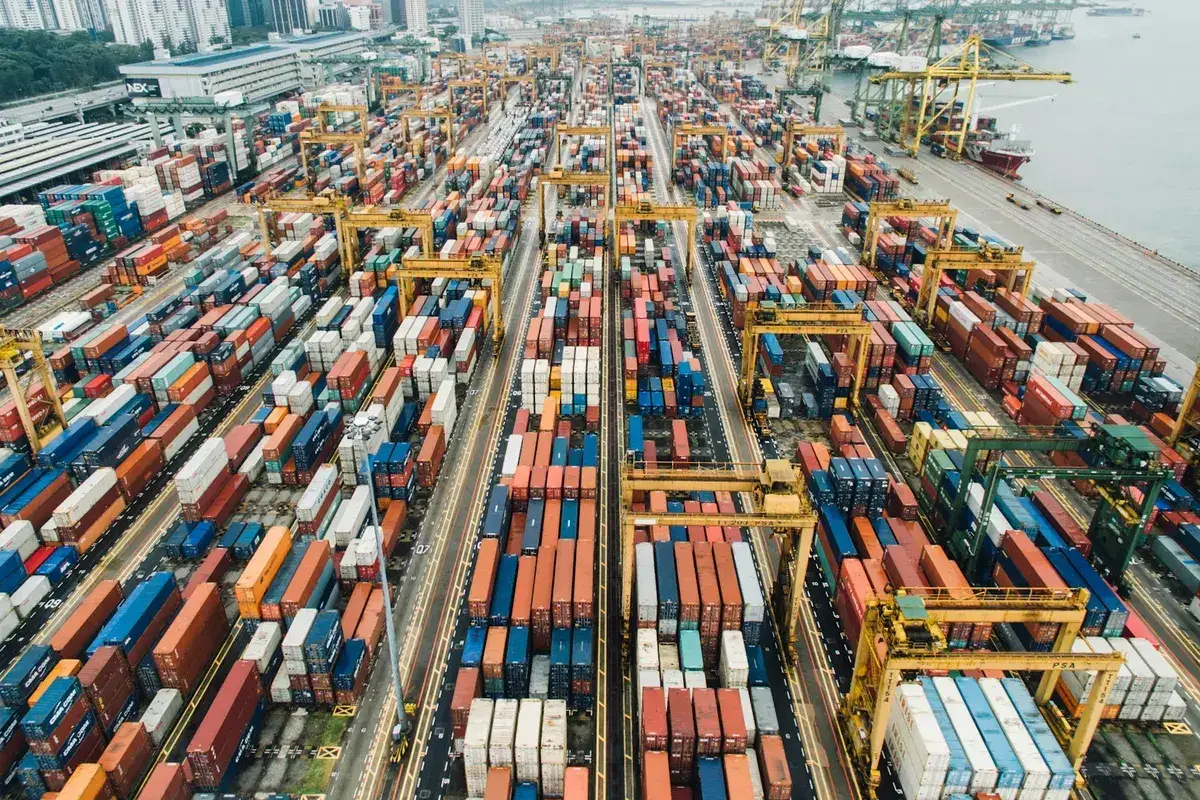
Container port with loading cranes from a bird's-eye view

Big bags – technically FIBCs (Flexible Intermediate Bulk Containers) – are the standard container for bulk goods: granulates, powders, pellets, building materials or raw materials for the plastics and chemical industry. As practical as the flexible bags are to handle, they are just as demanding in transport: the load works, shifts its centre of gravity and needs well-thought-out stowage. Speed Logistics ships big bags as direct transport – from a few units to the full load, within Germany, across Europe and to non-EU countries including customs clearance.

You give us the number, individual weight, dimensions and contents of the big bags as well as the loading situation – and receive a no-obligation fixed-price quote within a few hours. We also dispatch part quantities economically, without your goods being transloaded en route.

Big bag transport: quantities and vehicles

Big bags usually hold 500 to 1,500 kg and stand individually on pallets or are loaded by the loops. Depending on the quantity we dispatch the right vehicle:

  • Single big bags and part quantities in a Sprinter or 7.5-tonne truck – e.g. for samples, small series or urgent follow-up deliveries
  • Part loads and full loads in a curtain-side trailer with up to 24 tonnes payload
  • Loading palletised by forklift or by the lifting loops by crane or forklift boom

With heavy bags from one tonne, the payload usually limits the quantity, not the loading area – we show you the most economical vehicle choice in the quote.

Stowage and load securing for bulk goods in bags

The critical point in big bag transport is load securing: unlike rigid packages, filled bags deform during the run, powders and granulates compact and the centre of gravity moves. We therefore stow big bags form-fit – tightly packed against the front wall and load-securing points – and secure with anti-slip mats, lashing straps and, if needed, interlayers. Moisture-sensitive contents such as hygroscopic powders travel under a tight tarpaulin or with inner liners; food-grade or residue-controlled transports we coordinate in advance, including a swept-clean, odour-neutral load compartment.

Typical use cases

  • Plastic granulate from the compounder to the processor – on time for production planning
  • Building materials, sands and minerals on palletised big bags to plants and construction sites
  • Feed and food raw materials with documented load-compartment hygiene
  • Chemical raw materials – with ADR-compliant handling where dangerous goods classification applies

In practice it pays to clarify the unloading situation early: is there a ramp at the destination, a forklift with sufficient load capacity, or does unloading have to be from the side? The container itself also plays a role – single-use big bags are designed for only one filling and one transport, reusable qualities for correspondingly more uses. Damaged or leaking bags we do not take on board; a quick check at pickup protects driver, cargo and follow-up traffic. We ask these points in a structured way at order acceptance, so that nothing snags at the ramp or border.

Big bags to non-EU countries – with customs

Raw-material deliveries to Türkiye, North Africa or the Middle East we handle door-to-door: export declaration, border clearance and import coordination in the destination country, from EXW to DDP. Costs depend on weight and loading slots, vehicle size, distance, loading method and time pressure – transparently quoted in the fixed-price offer that you receive within a few hours depending on lane and lead time.

Quantity and matching vehicle in big bag transport
QuantityVehicle
Single big bags / part quantitiesSprinter or 7.5-tonne truck
Part and full loadsCurtain-side trailer up to 24 t payload
LoadingForklift (palletised) or crane/forklift boom

Frequently asked questions: Big Bag Shipping

How many big bags fit on a truck?

A curtain-side trailer offers space for around 33 pallet slots; with palletised big bags of usual footprint that corresponds to about 24 to 33 units in one layer – limited by the payload of up to 24 tonnes. With 1,000 kg bags, weight is therefore usually the limiting factor, not the area.

Do big bags have to stand on pallets?

For road transport, palletised loading is the standard: it enables forklift handling, a stable stand and clean load securing. Loading by the lifting loops is possible if a crane or forklift boom is available at the loading and unloading point – we clarify that at order acceptance.

How are moisture-sensitive powders protected?

Hygroscopic powders and granulates travel in big bags with inner liner or coated fabric, and on the vehicle the tight tarpaulin protects against splash water and rain. As a direct run without transloading, the goods also stay continuously in the same load compartment – without interim storage in the open or at open transfer ramps.

Are food-grade big bag transports possible?

Yes. For food and feed raw materials we provide a swept-clean, dry and odour-neutral load compartment and coordinate your hygiene requirements before loading. On the container side, food-compliant FIBCs are a precondition; the load-compartment suitability we document at pickup on request. Tell us your specification – such as HACCP requirements – directly with the enquiry.

What if the contents of the big bags are dangerous goods?

Then the ADR rules apply: the substance needs a UN number, the big bags must be approved and marked as packaging for it, and a driver with ADR training runs the load. Speed Logistics handles dangerous goods of classes 1–9 – give us the data from the safety data sheet with the enquiry.

What determines the price in big bag shipping?

Decisive are the total weight and number of slots, the required vehicle size, the distance, the loading method as well as time pressure; for non-EU lanes customs clearance and border lead times come on top. You receive a transparent fixed-price quote – depending on lane and lead time as a no-obligation guide-value range in advance. Recurring raw-material traffic we calculate on request as a framework price per lane.

Common mistakes in big bag shipping – what should I watch out for?

Damaged or leaking bags are overlooked, the unloading situation at the destination is not clarified (ramp, forklift capacity, side unloading), and single-use big bags are used for multiple transports, although they are designed for only one filling. Moisture-sensitive powders need inner liners or a tight tarpaulin, food-grade transports a swept-clean, odour-neutral load compartment. Speed Logistics asks these points in a structured way at order acceptance.

Why are big bags best loaded palletised?

For road transport, palletised loading is the standard because it enables forklift handling, a stable stand and clean load securing. Loading by the lifting loops is only possible if a crane or forklift boom is available at the loading and unloading point. Since filled bags work and shift their centre of gravity, the stable palletised stand is the safest starting point.

Request big bag shipping

Contact our dispatch team – fixed-price quote within hours, available 24/7.