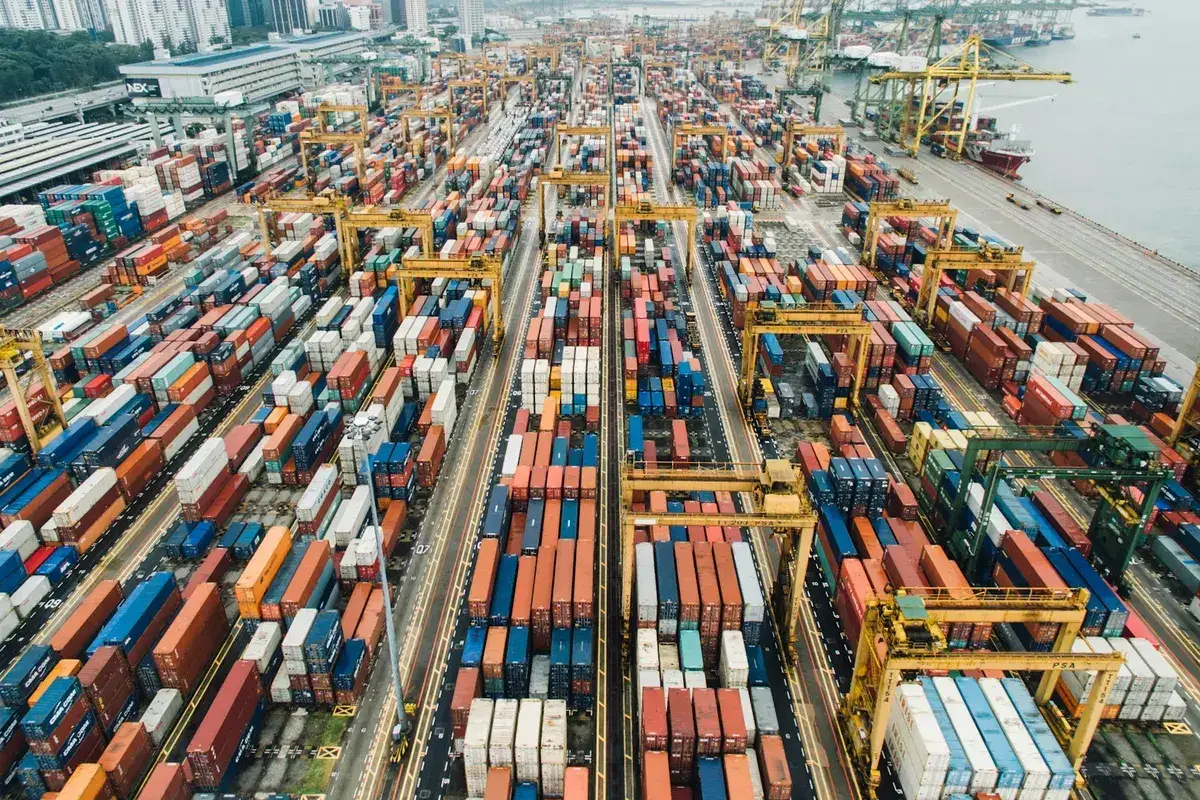
Sea freight is by far the most economical way to move large quantities of goods over long distances: goods travel in standardised containers on cargo ships between the world's ports. Where transit time is not the decisive factor – for example for plannable procurement, machine deliveries or trade goods in large volumes – sea freight beats every other mode of transport on price per tonne.
Speed Logistics organises your sea freight shipment as a continuous chain: pre-carriage by truck from the factory to the port of loading, booking of the right container, export and import clearance, and on-carriage to the delivery address – one contact door-to-door, with personal dispatch around the clock.
FCL or LCL: The Right Container for Your Volume
- FCL (Full Container Load): you book a complete container – 20-foot and 40-foot units are common. Your goods travel exclusively, without third-party co-loading, with lower handling and damage risk.
- LCL (Less than Container Load): your shipment shares the container with other shippers. Economical for smaller volumes, but with additional transhipments at the consolidation terminal and a somewhat longer transit time.
- Pre- and on-carriage by truck: we provide the right vehicle for loading at the factory and delivery in the destination country – from the van to the articulated truck with container chassis.
Which option is more economical depends on volume, weight and lane – as a rule of thumb, FCL is often worthwhile well below full container capacity, because the transhipment and consolidation costs of the LCL option are eliminated. We also plan the loading: a well-thought-out stowage and securing concept inside the container determines whether the goods survive the sea passage and transhipments undamaged.
Process and Planning of a Sea Freight Shipment
Early booking is decisive: sailings are scheduled, and slots on sought-after lanes are sometimes scarce weeks in advance. For a reliable quote we need the origin and destination, volume and weight, goods description and the desired time frame. We then check sailings, transit times and daily rates and propose the right connection – including a recommendation on the container type, from the standard to the high-cube to the open-top container for oversized cargo.
Equally important are complete export documents – commercial invoice, packing list and, depending on the goods, proofs of origin. And: consider transport insurance. Especially with long transit times across the sea and multiple transhipments, insurance cover is a small, sensible item in relation to the goods value.
Customs Clearance at the Seaport – from a Single Source
We handle export clearance at the port of loading and import clearance in the destination country as part of the transport chain – from EXW to DDP, matching the delivery term of your sales contract. This avoids the typical interface gap where the shipping line, customs agent and on-carriage forwarder are commissioned separately and refer to one another in the event of delays. Where needed, we check the import regulations and duty rates of the destination country in advance, so the total cost of delivery is established before booking.
What Does Sea Freight Cost?
Prices depend on container size (20 ft or 40 ft), port of loading and destination, transit time and current freight rates; on top come surcharges such as the bunker surcharge and port dues as well as pre- and on-carriage. Because the sea freight market fluctuates strongly, we work with daily quotes instead of outdated price lists: send us the route and volume and you will receive a current, no-obligation rate at short notice. Tell us your scheduling flexibility as well – those with some leeway on the departure can often use more favourable connections.