Direct Run Ruhr Area–Rotterdam for the Seaport
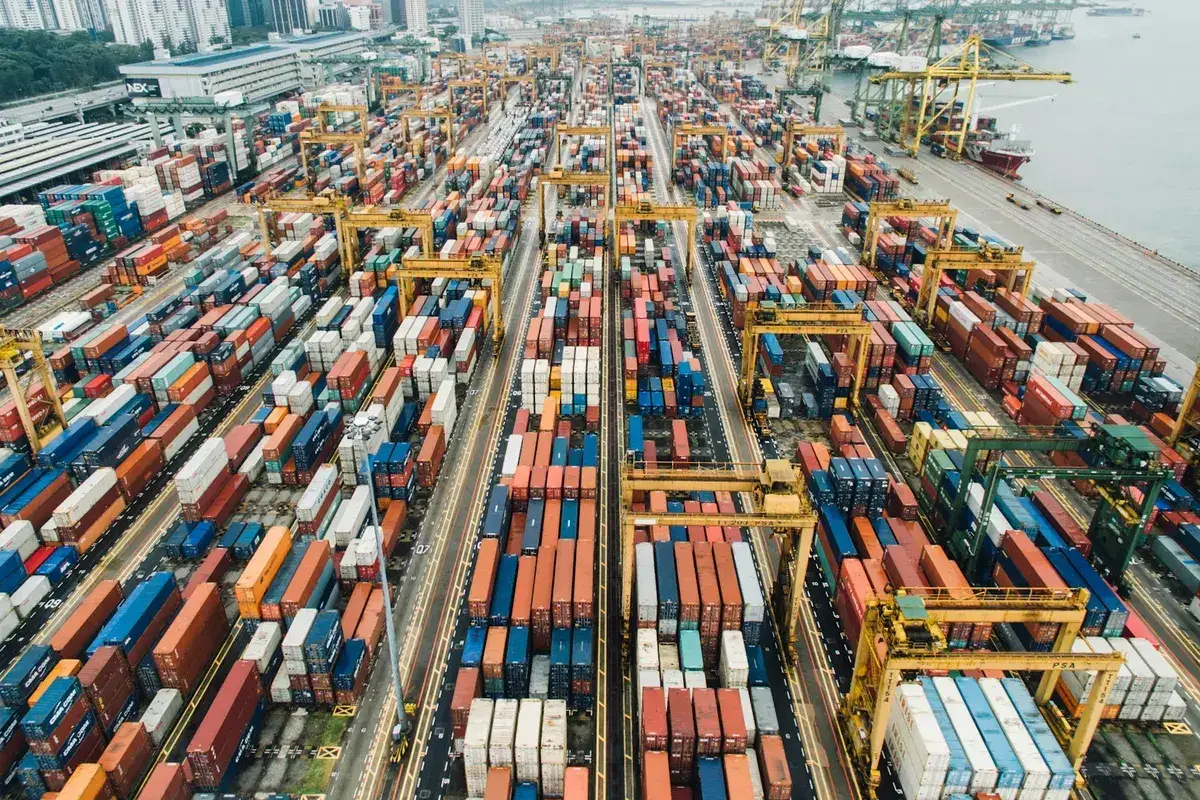
The Ruhr area–Rotterdam relation is one of the shortest and densest connections in German–Dutch traffic. Around 230 kilometres run via the A2 to the Venlo border crossing and on along Dutch motorways to the port of Rotterdam, Europe's largest seaport. A driver covers the route in a few hours, so container pre- and on-carriage as well as scheduled deliveries are possible on the same day. For exporting companies in the Ruhr area, Rotterdam is the gateway to overseas shipping, which is why a reliable and fast land connection to the terminal is a co-decisive factor for the entire supply-chain success.
EU Relation without Customs Formalities
The Netherlands is a founding member of the EU and part of the Schengen area and the single market. Between Germany and the Netherlands, all customs clearance is therefore eliminated – transit is one business day. Customs handling only becomes relevant for import or export containers via the seaport; the actual overland freight between the Ruhr area and Rotterdam runs without border formalities. This allows the short distance to be fully used for speed, without border stops extending the lead time.
- Direct run without transhipment – one vehicle, one driver
- Seaport pre- and on-carriage to Rotterdam terminals
- Part and full loads as well as express special runs
- GPS driver tracking and a dedicated contact person
Mind Terminal Slots and Low-Emission Zones
Dutch motorways are toll-free, which makes this relation favourable in terms of calculation. At the port of Rotterdam, however, terminal slots must be observed, and cities such as Rotterdam have low-emission zones that exclude older diesel vehicles – we deploy vehicles licensed accordingly. Because container terminals operate with fixed time windows, we align the arrival closely with the booked slot and thus avoid chargeable standing times.
Modes of Transport and Further Destinations in the Benelux Region
Which mode of transport suits your cargo and which details matter for seaport transports is explained in our Netherlands country guide. Besides Rotterdam, we serve Amsterdam, Eindhoven, Venlo and the entire Benelux region – from the classic full load to the time-critical express direct run for port pre- and on-carriage. The Netherlands is an enormously important trade and logistics partner for Germany, and Rotterdam bundles a large part of German overseas trade. That is why we place particular emphasis on on-time reliability at the terminal for this relation: every trip is trackable via GPS, and a dedicated contact person coordinates slot times and reports delays early. This turns the short distance into a real speed advantage in your supply chain. Whether container pre-carriage for shipping or import on-carriage from the terminal into the Ruhr area – we align every trip exactly with your schedule and reliably keep the arrival time even at high volumes at the port.