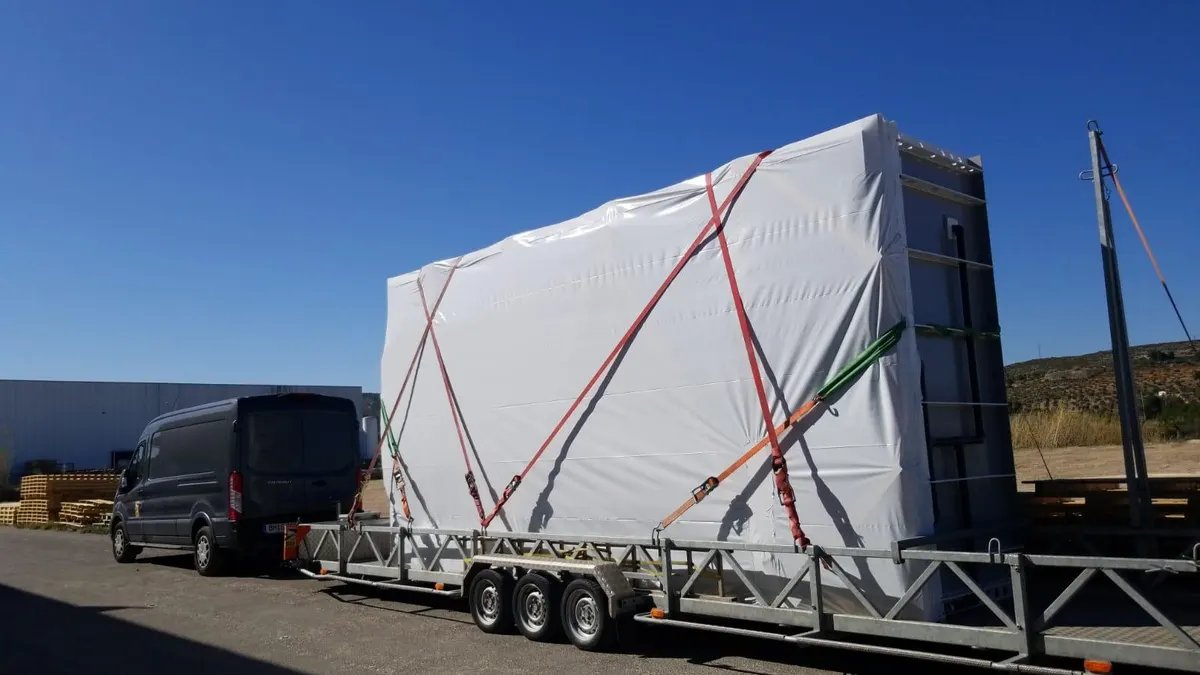
The Middle Corridor Munich–Almaty
The Germany–Kazakhstan relation today runs via the Middle Corridor, which completely avoids Russia. From Munich the route runs across the Balkans to Istanbul, on through Georgia to Baku, by ferry across the Caspian Sea to Aktau or Kuryk and finally across Kazakh territory to Almaty in the south-east of the country. In total, around 7,000 and more kilometres accumulate including the ferry passage; the realistic transport lead time is three to five weeks. This Trans-Caspian route has gained greatly in importance since 2022 and is today the central land connection between the EU and Central Asia.
Sanction-Compliant without Russia Transit
The classic northern route through Russia is no longer an option for many categories of goods for sanction reasons. The Middle Corridor is the sanction-compliant alternative: it runs via Georgia, Azerbaijan and the Caspian Sea without touching Russian territory. Kazakhstan is a non-EU country and a member of the Eurasian Economic Union (EAEU); we handle export, TIR transit and EAEU import in full and ensure the dual-use and end-use check. Particularly for machinery and technical goods, this check is decisive so that the shipment is not held at a border.
- Full loads and project transport via the Middle Corridor
- Export, TIR carnet and EAEU import from a single source
- Sanction and dual-use check before the start of transport
- Coordination of the limited Caspian ferry slots
Planning Ferry Slots and Lead Time Realistically
The critical bottleneck of this relation is the Caspian ferry between Alat (near Baku) and Aktau or Kuryk: the slots are limited and weather-dependent, which is why the lead time shifts depending on availability. We factor in this buffer and coordinate the ferry booking in advance. Almaty also lies around 1,200 kilometres south-east of Astana, so additional lead time must be allowed for destinations in the south-east of the country – a detail that we take into account from the outset when confirming deadlines.
Costs and Country Details of This Relation
How the costs of such a non-EU relation are composed is explained in the article Transport Costs Non-EU Central Asia/Middle East; the country details on customs and the EAEU are provided in the Kazakhstan country guide. We present a completed project in our case studies. A transport via the Middle Corridor is a demanding project of customs, ferry coordination and several border crossings – which is precisely our core competence in non-EU and project transport. We keep the shipment in view over the entire route, inform you at the critical points and ensure that every document, from export to EAEU import, is legally sound. This keeps even a multi-week long-distance relation to Central Asia predictable and transparent.